
Breadcrumbs
These links will help you get back to where you want to go faster.
The Best Low-Water Landscaping Design in San Tan Valley, Arizona
From Design to Build
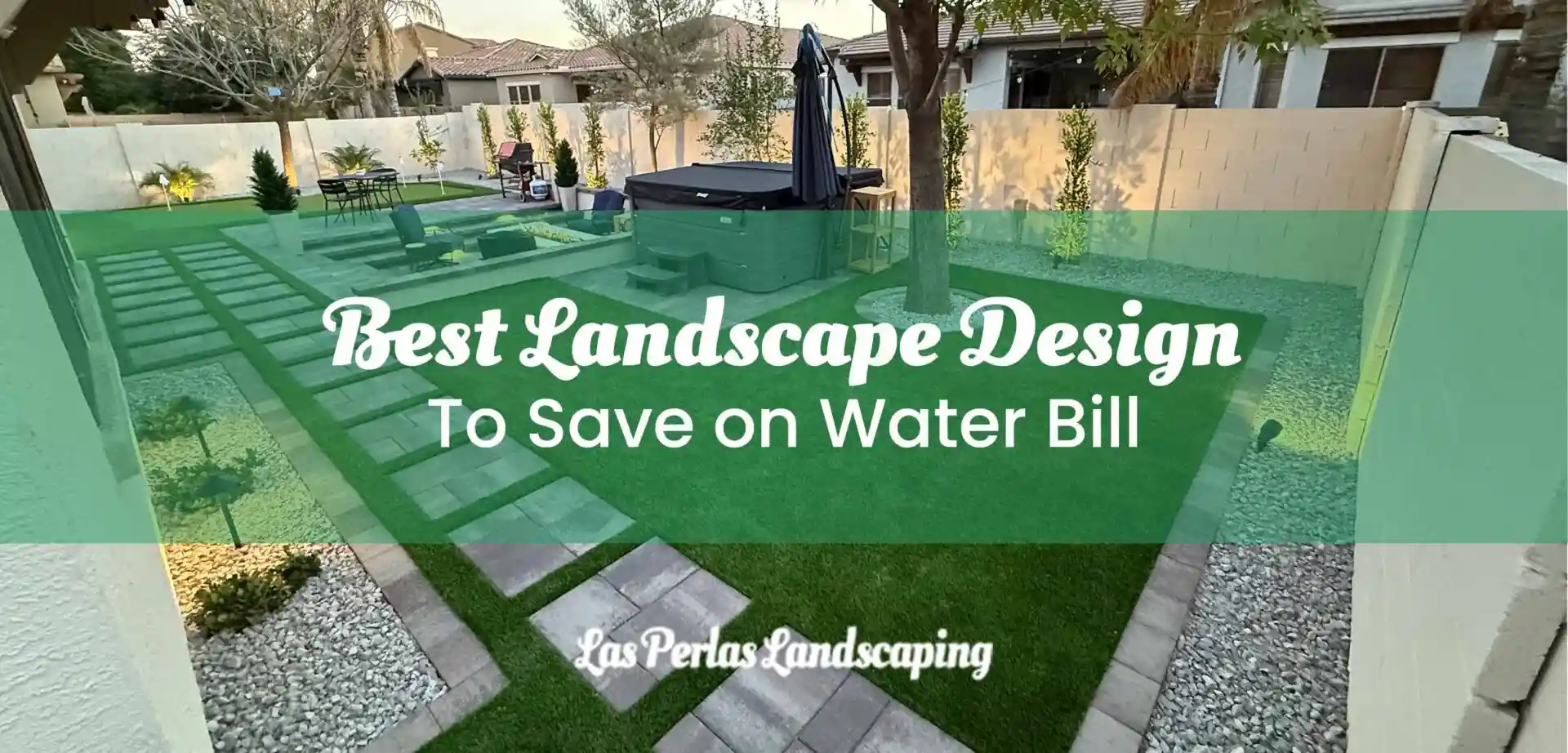
Living in San Tan Valley means embracing stunning desert vistas along with the challenges of intense summer heat, alkaline soils, and rising water costs. Outdoor water use often represents the largest portion of discretionary utility expenses for homeowners and businesses alike. Fortunately, science-based, low-water landscaping strategies can dramatically reduce water consumption, cut utility bills, and create beautiful, sustainable yards suited to the unique Sonoran Desert environment. This guide provides expert insights, practical tips, and actionable steps to transform any San Tan Valley property into a thriving water-efficient oasis.
Are you looking for a reliable and trustworthy local landscaper and hardscaper? Let us bring your front and backyard to life! Call or text us at (480) 522-9675, or schedule a free online consultation for BBQ & Chimenea, Fire Pit, Putting Green, Sod, Turf, Block Wall, Outdoor Concrete Patio, Travertine Flooring, Paver, or Pergola & Gazebo installation.
What you learn in this article:
– Low-water landscaping strategies can significantly reduce outdoor water use, lower utility bills, and create sustainable, attractive yards suited to the Sonoran Desert.
– Hydrozoning, grouping plants by water needs, helps conserve water by allowing tailored irrigation schedules for different plant types.
– Soil amendment with organic compost and mulching (organic or inorganic) improves moisture retention and reduces evaporation in local sandy soils.
– Rainwater harvesting and gray water reuse can supplement irrigation and reduce dependence on municipal water, following local regulations.
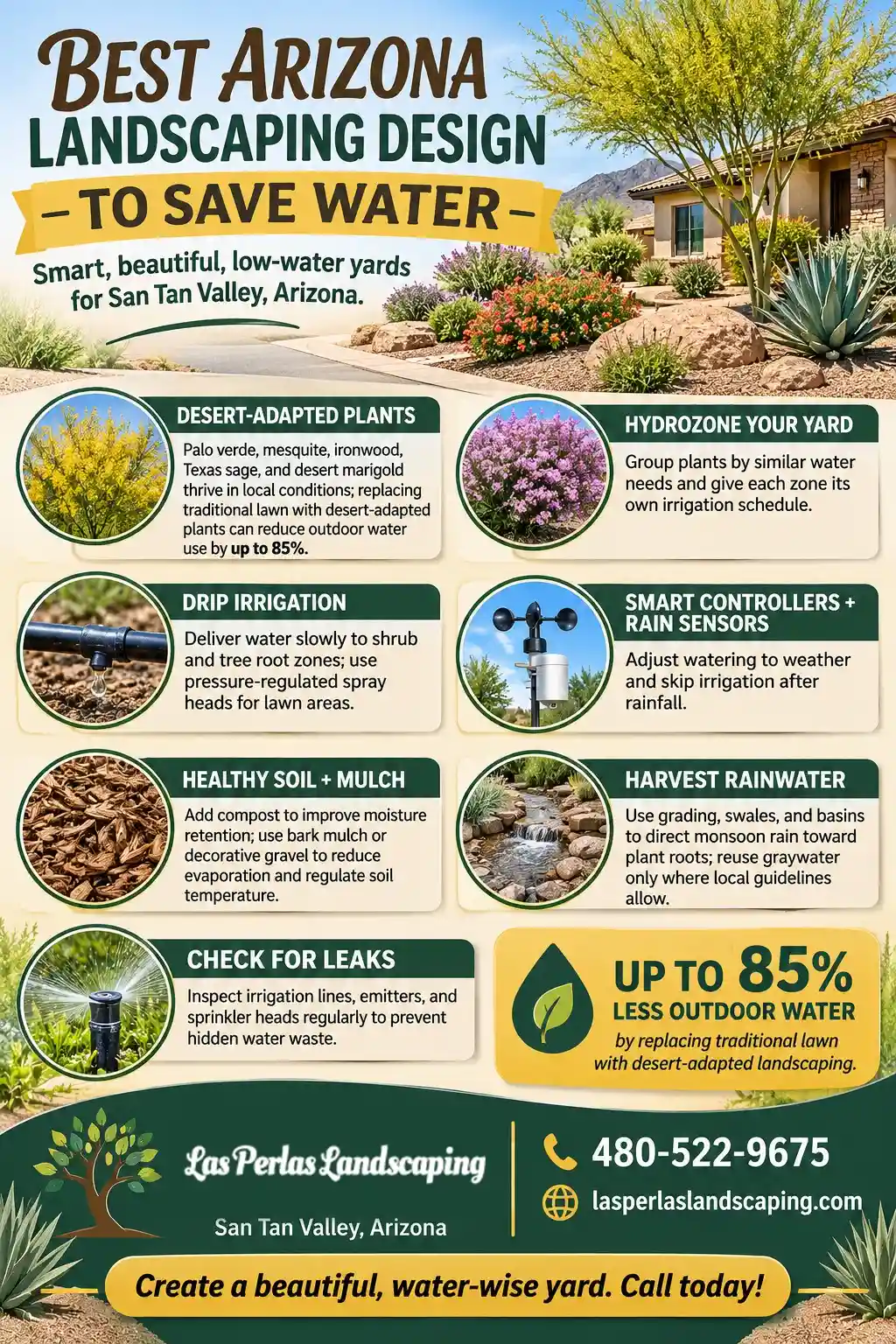
– Replacing traditional lawns with desert-adapted plants offers up to 85% water savings; recommended species include palo verde, mesquite, ironwood, Texas sage, and desert marigold.
– Efficient irrigation systems combine pressure-regulated spray heads for lawns, drip irrigation for shrubs and trees, and smart controllers with rain sensors to optimize watering.
– Regular leak detection and irrigation maintenance are critical to prevent unnoticed water loss, especially from overnight watering.
– Comparing grass options: natural grass offers cooling but is water-intensive; sod requires significant irrigation; artificial turf saves water but can become very hot and lacks ecological benefits.
– Xeriscaping can reduce outdoor water use by up to 85%, dramatically lowering monthly gallons used and utility bills.
– Low-water landscaping improves curb appeal and can increase property values by 10% to 12%, while also reducing maintenance and budget unpredictability for commercial properties.
Core Principles of Water-Wise Landscape Design
Intentional Planning and Design
Creating a water-efficient yard starts with thoughtful planning rather than simply selecting plants. Before removing existing turf, sketch your lot to map structures, utility lines, and plants, ensuring new vegetation is spaced properly away from buildings and power lines. Use your design to clarify the intended use of each space, whether for privacy, shade, wildlife habitat, or entertaining.
Hydrozoning: Grouping Plants by Water Needs
Grouping plants with similar irrigation requirements into distinct hydrozones is foundational for conserving water. This approach prevents overwatering drought-tolerant species and avoids under-watering thirstier plants. Most residential irrigation systems have around four zones that reflect differences in sun exposure, shade, or plant types such as lawn versus landscaping beds. Separating these zones allows smart irrigation controllers to run different watering schedules tailored to each plant group, reducing waste.
Soil Management and Mulching
Arizona’s sandy and caliche-laden soils drain rapidly and retain few nutrients, making soil amendment essential. Incorporating organic compost into planting beds boosts moisture retention at the roots. Mulching complements this by covering soil to reduce evaporation, regulate temperature, and suppress weeds. Organic mulches like bark chips and wood shavings enrich soil as they break down, while inorganic options such as decomposed granite and crushed rock offer decorative, long-lasting coverage.
Rainwater Harvesting and Gray Water Use
Harvesting rainwater and utilizing gray water can further reduce reliance on municipal water for irrigation. Techniques like grading, swales, and basins channel monsoon rainfall directly to plant roots, supplementing irrigation with free hydration. Gray water from household sources such as laundry, showers, and sinks can serve landscape irrigation if carefully managed to avoid runoff and contamination, following local guidelines.
Maximizing Water Savings Through Plant Selection
The Value of Desert-Adapted Plants
Replacing traditional lawn with desert-adapted plants is the single most effective way to slash outdoor water consumption. Phoenix water program estimates up to 85% less outdoor water use compared to grass. Native desert plants have evolved cellular mechanisms to withstand alkaline soils, intense sunlight, and minimal rainfall, requiring minimal supplemental irrigation once established.
Top Desert-Adapted Species for San Tan Valley
Choosing plants suited to local conditions ensures both water savings and landscape health. The following species are widely recommended for San Tan Valley, though individual site factors like sun exposure and drainage should be considered:
- Trees: Desert Museum palo verde (thornless, yellow blooms), Chilean mesquite (broad canopy, drought-resilient), Ironwood (evergreen with lavender flowers)
- Shrubs and Accents: Texas sage (purple blossoms after humidity), Red bird of paradise (pollinator-friendly), Arizona rosewood (tall screening shrub), Texas mountain laurel (fragrant flowers), Mexican honeysuckle (hummingbird attractor, low water needs)
- Groundcovers and Perennials: Blackfoot daisy (heat-tolerant), Desert marigold (reseeds easily), Trailing lantana (colorful cascading flowers)

Initial irrigation is essential for establishing plants, but watering can be reduced substantially as roots develop. This careful management ensures plant health without unnecessary waste.
Irrigation Technologies and Best Practices
Efficient Irrigation Systems for Lawns and Beds
Optimal irrigation combines the right hardware with smart scheduling to minimize water loss. For turf zones, pressure-regulated pop-up spray heads provide even coverage at recommended pressures, reducing misting, fogging, and runoff. For shrubs and trees, drip irrigation delivers water slow and steady directly to root zones, saving 20 to 50% water compared to traditional sprinklers.
Are you looking for a reliable and trustworthy local landscaper and hardscaper? Let us bring your front and backyard to life! Call or text us at (480) 522-9675, or schedule a free online consultation for BBQ & Chimenea, Fire Pit, Putting Green, Sod, Turf, Block Wall, Outdoor Concrete Patio, Travertine Flooring, Paver, or Pergola & Gazebo installation.
Pressure-Regulated Spray Heads
Many irrigation systems run at pressures unnecessarily higher than nozzles are rated for, leading to waste. U.S. EPA WaterSense-certified spray bodies maintain constant, optimal pressure, enhancing irrigation uniformity and cutting water use by 20% or more. Installing pressure-regulating stems can save thousands of gallons annually and reduce costs.
Smart Controllers and Rain Sensors
Switching from standard clock timers to WaterSense-labeled smart controllers can lower irrigation water use by about 15%. These controllers adjust watering schedules based on real-time local weather, evapotranspiration rates, and recent rainfall, skipping cycles when irrigation isn’t needed. Pairing these with rain sensors adds an automatic shutoff feature during rain events, saving thousands of gallons, especially on larger systems.
Leak Detection and Maintenance
Regular auditing of your irrigation system for leaks and broken heads is one of the most cost-effective water-saving actions. Many leaks go unnoticed since irrigation often runs overnight or early morning. Seasonal monitoring and prompt repair prevents water waste and higher bills.
Evaluating Grass Options and Alternative Surfaces
Comparing Natural Grass, Sod, and Artificial Turf
Understanding differences between seed-grown grass, sod, and artificial turf is vital for informed landscaping decisions. Sod is pre-grown grass rolled out for quick installation with typical irrigation needs identical to seeded lawns. Artificial turf, composed of synthetic fibers, requires little to no irrigation, offering dramatic water savings yet comes with tradeoffs.
Pros and Cons of Artificial Turf
Artificial turf delivers substantial water conservation since it eliminates ongoing irrigation, needing only occasional rinsing for dust and debris removal. However, synthetic turf can reach surface temperatures hotter than asphalt, especially in full sun, making shading or partial coverage strategies essential. Additionally, unlike living plants, turf lacks ecological benefits such as carbon sequestration, cooling effects, and wildlife habitat.
Natural Grass Considerations in the Desert
Natural turfgrass offers cooler surfaces and environmental advantages but is costly and resource-intensive to maintain in Arizona’s harsh climate. Many grass types need frequent watering, fertilization, and mowing, with cool-season grasses often failing to survive the intense summer heat. Warm-season Bermudagrass is more heat-tolerant but goes dormant in winter.
Hybrid Approaches
For homeowners seeking the best of both worlds, combining artificial turf or small natural lawns in heavy-use areas with surrounding desert plants creates functional, low-water landscapes. Play zones, pet runs, and pool surrounds can retain green, soft surfaces, while xeriscaping dominates the rest of the yard.
Optimizing Sprinkler Systems for Lawns
If maintaining natural grass, selecting the right irrigation components is critical to avoid excessive water waste. Multi-stream rotary nozzles produce heavier droplets that penetrate wind and reduce evaporation compared to traditional misting spray heads. Subsurface drip emitters serve turf borders and planting beds by applying water directly to roots, lowering evaporation by 30 to 50%. Smart, weather-based controllers integrated into these systems ensure watering matches actual plant needs and weather conditions.
Water Bill Forecasting and Financial Benefits
Calculating Outdoor Water Usage
Accurately predicting irrigation water consumption helps homeowners understand potential savings and justify landscape investments. The EPA’s WaterSense Outdoor Water Budget Tool uses ZIP code, landscape size, plant type, and irrigation method alongside local climate data to estimate monthly water needs. A basic calculation approximates monthly irrigation gallons by multiplying the irrigated area (sq ft), monthly water requirement (inches), and conversion factor 0.623, then dividing by irrigation efficiency.
Predictive Savings from Xeriscaping
Replacing turf with desert-adapted plants can reduce outdoor water use by up to 85%, according to Phoenix estimates. For instance, a yard previously using 15,000 gallons per month may drop to around 2,250 gallons after conversion. Local landscapers note well-designed xeriscapes reduce summer water use from roughly 12,000–18,000 gallons to 3,000–6,000 gallons on quarter-acre lots.
Financial Impact and Property Value
Beyond utility bill reduction, professional low-water landscaping improves curb appeal and can raise property resale values by 10% to 12%. For commercial properties, replacing traditional landscaping with drought-tolerant plants and efficient irrigation streamlines maintenance costs and improves budget predictability.
Utility Rates and Incentives in San Tan Valley
EPCOR serves San Tan Valley with water and wastewater services, but recent rate increases have heightened water cost concerns. In 2024, EPCOR sought a near 52% wastewater rate increase and a 13% water rate hike, significantly raising monthly bills. Future rate cases are anticipated, so staying updated with current tariffs is essential when forecasting savings. While Phoenix offers incentives for turf removal and xeriscape installation, local rebates in San Tan Valley through EPCOR or government programs may vary—check with providers before starting projects.
Creating a Thriving, Water-Efficient Landscape
Transforming your San Tan Valley yard into a low-water landscape is a rewarding investment that balances sustainability, aesthetics, and cost savings. By embracing desert-adapted plants, thoughtful design, modern irrigation technologies, and smart water management, you can enjoy a lush outdoor environment well adapted to local conditions while dramatically reducing utility bills. Whether through full xeriscaping, hybrid solutions with artificial turf, or upgrading irrigation components, informed decisions deliver long-term benefits for your home or business.
Partnering with local experts, such as Las Perlas Landscaping, can help navigate San Tan Valley’s unique soil and climate challenges to design and install a water-efficient landscape that thrives year-round. Taking advantage of smart practices and available resources will maximize your investment and contribute to the sustainable stewardship of precious desert water resources.
Are you looking for a reliable and trustworthy local landscaper and hardscaper? Let us bring your front and backyard to life! Call or text us at (480) 522-9675, or schedule a free online consultation for BBQ & Chimenea, Fire Pit, Putting Green, Sod, Turf, Block Wall, Outdoor Concrete Patio, Travertine Flooring, Paver, or Pergola & Gazebo installation.